
Abstract:
The emergence of multi-drug antibiotic resistance in many disease-causing bacteria has raised the prospect of a devastating return to the pre-antibiotic era with recent predictions suggesting that infectious disease could become the biggest killer of humans by 2050. It is therefore imperative that new antibiotics are developed to counteract this problem.
The development of a unique natural product antibiotic called obafluorin, that is produced by a soil bacterium called Pseudomonas fluorescens, is the topic of talk. Obafluorin was discovered 40 years ago and works by a different mechanism to any clinically used antibiotic which means it can kill bacteria that have resistance to existing drugs. However, its chemical structure means it is rapidly broken down in the body which limited its further development.
The Pseudomonas metabolite obafluorin was discovered in 1984 as part of a program to identify new beta-lactam antibiotics. Obafluorin is active against gram-negative and -positive pathogens, including in mouse models, and comprises a reactive beta-lactone moiety that is essential for its activity. Despite this, obafluorin was never developed as an antibiotic, possibly due to the reactivity of the beta-lactone.
To address the reactivity of obafluorin the synthesise of structural analogues in which the beta-lactone is replaced with a beta-lactam ring, in addition to analogues altered in other key structural motifs. These new analogues are tested for their antibacterial activity and used as chemical probes in biochemical, protein mass spectrometry, and structural biology studies to help understand the mechanism of action. Ultimately, this information will be used to design improved variants of obafluorin as potential lead structures for antibiotic development.
Biography:
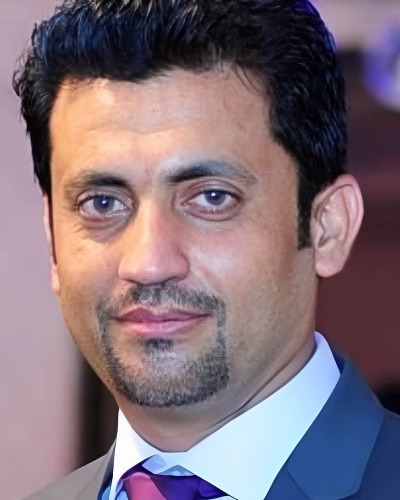
I obtained an HEC Pakistan Scholarship to pursue a PhD in Synthetic Organic Chemistry at University of Bristol in Professor Varinder Aggarwal’s group (2006–2011). Following an EPSRC-funded postdoctoral fellowship at University of Nottingham, I served as a chemistry faculty member at COMSATS University Islamabad Pakistan and King Saud University Saudi Arabia. Recently, I was awarded the prestigious Daphne Jackson Trust Fellowship UK (2023–2025). My expertise includes synthetic organic, natural product, and medicinal chemistry, with publications in leading international journals.
Copyright 2024 Mathews International LLC All Rights Reserved
