
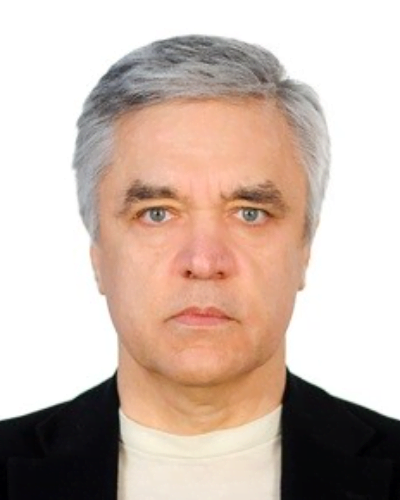
Director
N.D. Zelinskii Institute for Organic Chemistry of the Russian Academy of Sciences, Russian Federation
Abstract:
Despite breakthroughs in research that have led to an increased understanding of PPM-based human disease, the translation of discoveries into therapies for patients has not kept pace with medical need. It would be extremely useful to integrate data harvesting from different databanks for applications such as prediction and personalization of further treatment to thus provide more tailored measures for the patients and persons-at-risk resulting in improved outcomes and more cost effective use of the latest health care re-sources.
Translational researchers, biodesigners and biomanufacturers are beginning to realize the promise of PPM, translating to direct benefit to clinical practice. For instance, companion diagnostics tools, theranostics, multi-targeted network-guided medicines, molecular imag-ing and targeted therapies represent important stakes for Biopharma in terms of market access, of return on investment and of image among the prescribers. In this sense, credi-bility is vital in biopharma as a competitive industry, and effective pharma marketing strategies are critical to building it. Moreover, design-driven pharmaceutical marketing should form alliances with specialists (doctors, pharmacists, drug designers) – that would lend credibility and trust. This ensures a trusted voice for upgraded brands for consum-ers and health care stakeholders while encouraging the integration of these partnerships into pharmaceutical marketing strategies.
For life science and biopharma companies, the challenge, as a rule, is not a lack of exper-tise. It is translating complex science into clear, confident communication without losing accuracy or personality. Strong on-brand content helps the life science or biopharma business look more credible and bridges that gap. So developing the next-generation medicines and diagnostic tools requires changes to traditional clinical trial designs that result in new types of data. Making the best use of those innovations and being ready to demonstrate results for regulatory bodies requires specialized knowledge that many clini-cal development teams do not have.
Healthcare is undergoing a transformation, and it is imperative to leverage new technolo-gies to support the advent of PPM. It is urgently needed to to discover, to develop and to create new (targeted and/or smart/intelligent) drugs. With the support of nanotechnology, new targeted therapeutic agents and biomaterials, or aid the development of assays for disease biomarkers and identification of potential biomarker-target-ligand (drug) tandems to be used for the targeting, PPM is making phenomenal steps in the future to come. This is the reason for developing global scientific, clinical, social, and educational projects in the area of PPM and design-driven translational medicine to elicit the content of the new trend. The latter would provide a unique platform for dialogue and collaboration among thought leaders and stakeholders in government, academia, industry, foundations, with an interest in improving the system of healthcare delivery on one hand and drug discov-ery, development, and translation, on the other one, whilst educating the policy commu-nity about issues where biomedical science and policy intersect.
In today’s competitive design-driven pharmaceutical industry, developing effective mar-keting strategies is crucial for the success of any pharmaceutical product. Marketing is vital in promoting awareness, driving sales, and fostering brand loyalty among healthcare pro-fessionals, patients, and other stakeholders. With the right marketing approach, pharma-ceutical companies can effectively communicate the value and benefits of their products, ultimately contributing to improved patient outcomes and business growth. So, the Grand Change and Challenge to secure our Health and Wellness are rooted not in Medicine, and not even in Science! Just imagine WHERE?! In the upgraded Hi-Tech Culture!
Biography:
Sergey Suchkov was born in the City of Astrakhan, Russia, in a family of dynasty medical doctors. In 1980, graduated from Astrakhan State Medical University and was awarded with MD. In 1985, Suchkov maintained his PhD as a PhD student of the I.M. Sechenov Moscow Medical Academy and Institute of Medical Enzymology. In 2001, Suchkov maintained his Doctor Degree at the National Institute of Immunology, Russia. From 1989 through 1995, Dr Suchkov was being a Head of the Lab of Clinical Immunology, Helmholtz Eye Research Institute in Moscow. From 1995 through 2004 - a Chair of the Dept for Clinical Immunology, Moscow Clinical Research Institute (MONIKI). In 1993-1996, Dr Suchkov was a Secretary-in-Chief of the Editorial Board, Biomedical Science, an international journal published jointly by the USSR Academy of Sciences and the Royal Society of Chemistry, UK. At present, Dr Sergey Suchkov, MD, PhD, is: Director for Center of Biodesign of N.D. Zelinskii Institute for Organic Chemistry of the Russian Academy of Sciences, Moscow, Russia; Senior Scientific Advisor of China; Hong Kong Innovation International Business Association; Hong Kong R&D Director of InMedStar, Russia. He is also a member of the: Russian Academy of Natural Sciences, Moscow, Russia; New York Academy of Sciences, USA; American Chemical Society (ACS), USA; American Heart Association (AHA), USA; European Association for Medical Education (AMEE); Dundee, UK; EPMA (European Association for Predictive, Preventive and Personalized Medicine), Brussels, EU; ARVO (American Association for Research in Vision and Ophthalmology); ISER (International Society for Eye Research) and Personalized Medicine Coalition (PMC), Washington, DC, USA.
© 2026 Mathews International LLC. All rights reserved.
